When a visitor is about to give up, Pulse asks what they need and gets them there, so more of your traffic turns into orders, sign-ups and answers instead of exits and support calls.
Send us a URL. We’ll show you where visitors get stuck on your pages and what an agent would do there.




Knowing wasn’t the bottleneck. Doing was.
Insights create homework. You don’t want homework, you want things fixed.
You’re drowning in dashboards that tell you what broke but never why. And even when you know why, someone still has to prioritize the fix, brief it, build it, and ship it, while the visitor who hit the problem is long gone.
The Fix That Doesn’t Wait for Your Roadmap.
How It Works

Pulse, Evolved.
A decade ago, we pioneered embedded micro surveys with advanced targeting, the research our agents still learn from, powering smarter decisions across product, experience, and conversion. Pulse has always shown you where people get stuck. Now it also gets them unstuck, while they’re still on the page.
Everything we learned from a decade of listening is now wired to act.
How CLIENTS describe it
Doing the work behind the scenes without the customer knowing.
We don’t ask you to take our word for it
Ten years in production on some of the busiest sites on the internet.
of decisions on live enterprise sites, every one a call to offer to unstick the user, or stay out of the way
the industry-standard response rate, because we ask the right person, on the right page, at the moment the question actually matters
across pharma, retail, financial services and media, hundreds of programs, all through full enterprise security review
Case study
NJ Transit
40%
clicked through to the alert
Frequently asked questions
What does Pulse Insights do?
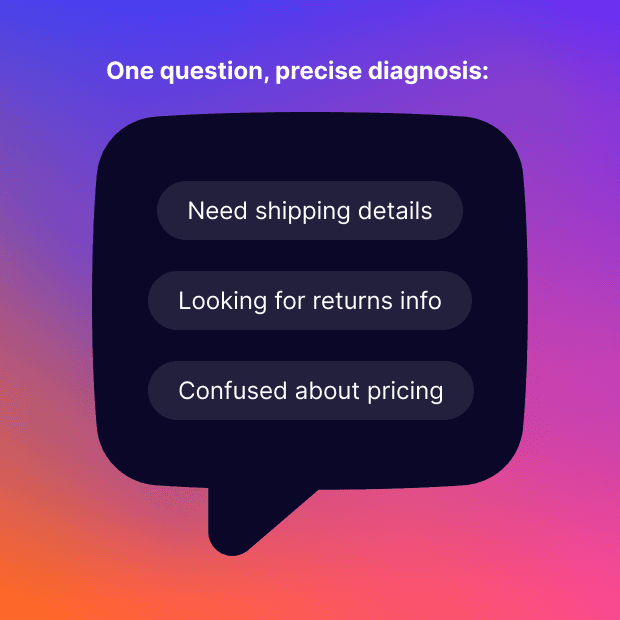
Pulse Insights is an AI-powered experience optimization platform. Its Pulse agents find visitors who are about to give up, ask what they need with one small card, and get them there, so more of them finish instead of leaving or calling.
How is this different from analytics or session replay?
Analytics and replay tools show you where visitors struggled after the fact. Pulse identifies the cause during the session and acts on it. Most teams eventually run both, because one explains the past and the other changes the present.
Do we need engineering resources to run this?
No development project. It runs on the Pulse tag, which many sites already have. We draft the questions and answers, your team approves them, and it goes live; changing an answer later is a content task, not a release. Our build takes days; your approvals set the date.
What kinds of problems does it solve?
Checkout hesitation, navigation and findability failures, support self-service that is not resolving, onboarding drop-off, and retention risk. The common thread is a visitor who wants to continue and cannot.
What makes it appear?
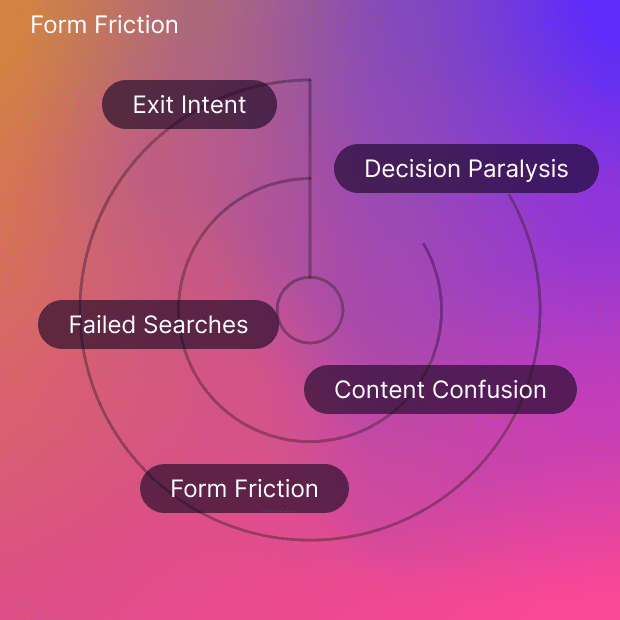
Signs that someone is struggling: going back and forth, searching again and again, stalling on a step, heading for the exit. When the signs line up, it steps in. You decide how sensitive it is, so people who are just browsing are left alone.
Is it a chatbot?
No. Chat waits for people to come to it. Pulse agents find the people who need help, ask one question and get them to the answer, and can bring them to your chat when a conversation is the best next step.
How do you define friction?
Any sign someone is struggling to do what they came to do. We start from what your visitors have told us and what we can see on the page, then tune it with you.
How do you know it helped?
We count everyone who engaged and what they went on to do, and report it against a number you already track, like orders, sign-ups or calls.
What do I pay for?
You pay when a visitor actually engages with the agent. Showing it costs nothing. Because you can see what those visitors did next, you can put a value on each engagement.
How should we judge any approach, including yours?
Seven tests: reach the people who need help and stay invisible to everyone else; act during the visit, not afterward; know what to ask; use whatever fix fits; say only what your team approved; go live without waiting for a rebuild; and show what it drove. See the checklist on the Pulse agents page.
One tag you already have. We configure it, you approve it, it goes live. Our build takes days; your approvals set the date.